
When teachers think about mental health support, it can feel overwhelming.
We imagine counselors, interventions, crisis plans, or specialized programs.
But mental health support in the classroom often begins with small, consistent choices.
It’s not about becoming a therapist.
It’s about creating an environment where students feel emotionally steady enough to learn.
Here are five simple ways to provide mental health support in your classroom — without adding more to your plate.
1. Create Predictable Daily Routines
Mental health support starts with predictability.
Students regulate best when they know:
• What happens when they enter
• What the structure of the day looks like
• What is expected of them
Unpredictability increases anxiety.
Predictability builds safety.
Even small, consistent routines — especially at the start of the day — can lower emotional stress.
2. Normalize Emotional Language
Providing mental health support means giving students words for what they feel.
When students can identify emotions like:
• Frustration
• Worry
• Disappointment
• Excitement
They are more likely to regulate instead of react.
This doesn’t require long discussions.
It can happen through simple reflection prompts, check-ins, or consistent emotional vocabulary woven into your routine.
3. Reduce Emotional Triggers During Transitions
Transitions are often when dysregulation appears.
Moving from:
• Home to school
• One subject to another
• Group work to independent work
Each shift requires adjustment.
Mental health support means building structures that make those transitions smoother.
Clear expectations.
Consistent procedures.
Stable start-of-day routines.
These small structural supports protect students who are already carrying stress.
4. Protect Your Own Emotional Regulation
Students are highly responsive to adult tone.
When teachers feel rushed, reactive, or overwhelmed, students sense it.
Mental health support in the classroom includes protecting your own regulation.
This doesn’t mean eliminating stress.
It means reducing unnecessary decision fatigue and unpredictability.
Structure helps teachers regulate — which in turn helps students regulate.
5. Commit to Long-Term Skill Building
Mental health support is not a one-day lesson.
It’s a pattern.
When students consistently practice:
• Reflection
• Emotional awareness
• Responsible decision-making
• Self-regulation
Those skills compound.
A structured daily framework can support that growth quietly over time.
That’s why I moved away from disconnected activities and toward a predictable, skill-building system.
The 180 Days of SEL Morning Work for Grades 3–6 was designed to support mental health through daily consistency rather than sporadic interventions.
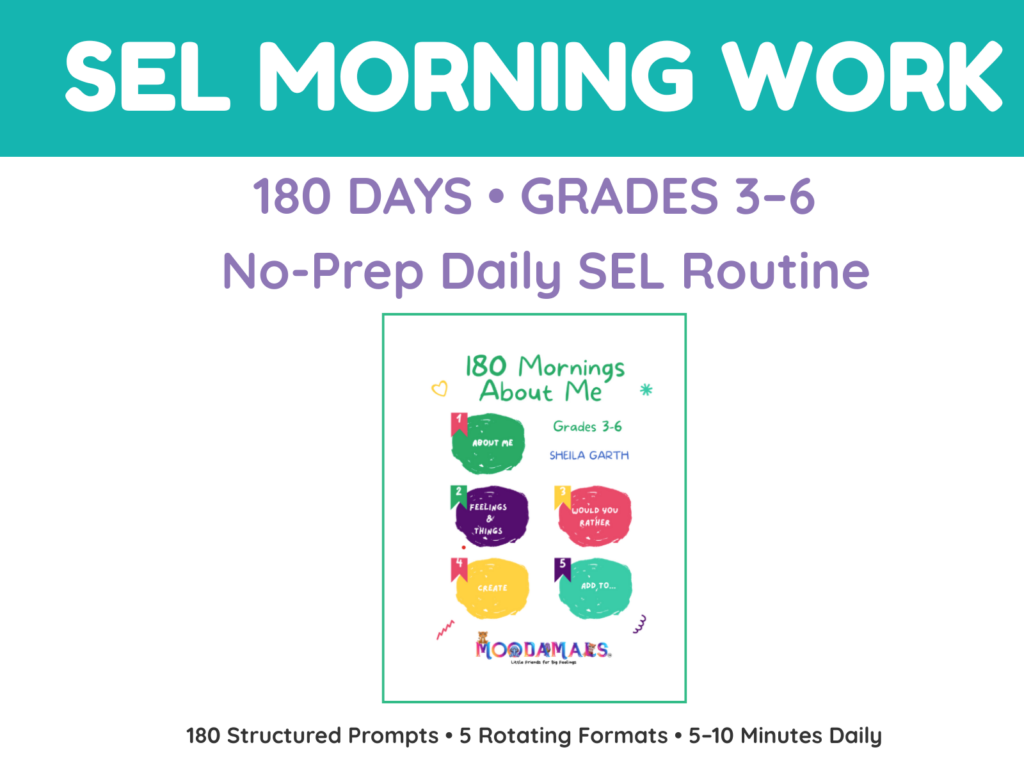
It isn’t a mental health program.
It’s a structured routine that builds internal tools gradually.
If you’re looking for ways to provide steady mental health support in your classroom without adding complexity, you can explore the resource here:
180 Days of SEL Morning Work for Grades 3–6
If you’d like to explore a free 10-page preview of the daily SEL framework mentioned above, you can view it here:
FREE 10-Day Morning Work | SEL Daily Check-Ins & Reflections | Grades 3-6
Final Thought
Mental health support doesn’t require grand gestures.
Often, it requires consistency.
When classrooms feel predictable, emotionally aware, and steady, students have a stronger foundation for both learning and well-being.
And small, steady routines can make a larger impact than we sometimes realize.