When Worry Walks into the Classroom You Need 20 Amazing Picture Books To Help You!
You can spot it sometimes — the student who clings to their backpack strap, chews their sleeve, or stares at the floor when everyone else is laughing. Anxiety shows up differently for every child.
As a counselor and former teacher, I’ve learned that sometimes the best way to help kids open up isn’t through a worksheet or a chart — it’s through a story. This is why I wanted to share 20 Creative Worry SEL Picture Books That Teachers And Moms Will Love To Read.
Picture books let students see their feelings reflected safely outside themselves. They create an entry point for conversation, empathy, and calm.
Here are 20 books — many that don’t show up on typical SEL lists — that help kids name, explore, and manage anxiety. Each one includes a simple, art-integrated idea tailored for the grade level you teach.
Books for Grades K–2: Gentle Starters for Talking About Worry
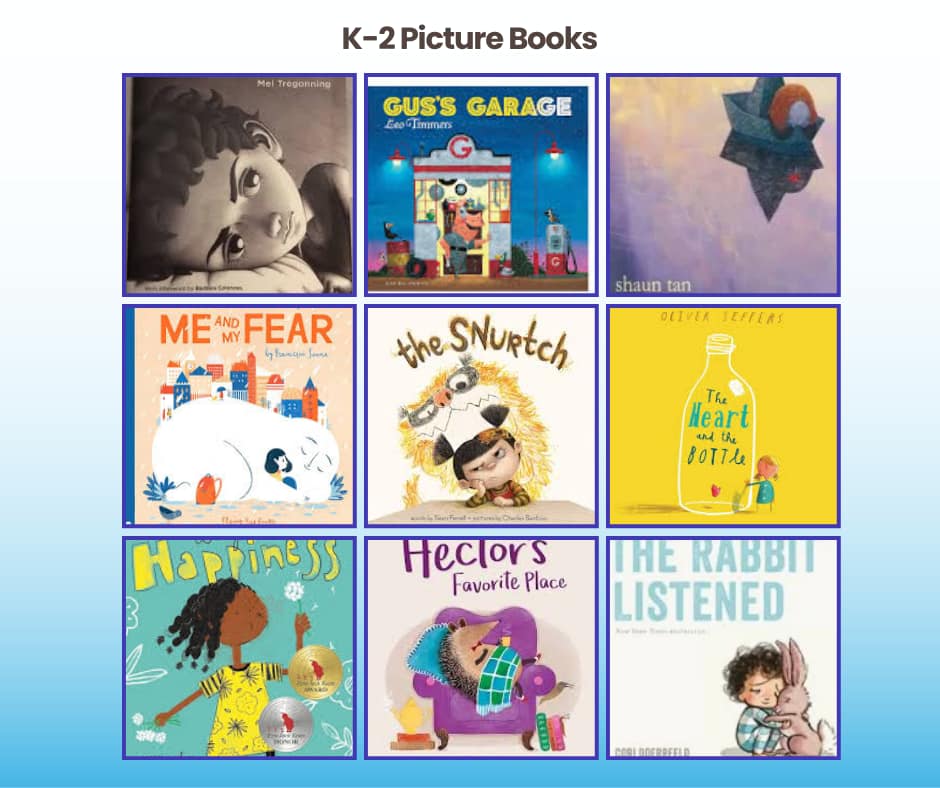
1. Small Things by Mel Tregonning
A nearly wordless book that beautifully captures quiet worry and the relief of connection.
Try this: Have students use pencil or charcoal to draw their “small worries” on paper, then gently smudge them with tissue to show how sharing helps worries fade.
2. Gus’s Garage by Leo Timmers
A fun reminder that creative problem-solving can calm anxious energy.
Try this: Using scrap paper, stickers, and tape, let students “build” their own invention to fix a worry.
3. The Red Tree by Shaun Tan
Surreal art shows that even hard feelings can hold hope.
Try this: Use watercolors to paint a dark stormy sky — then add one bright red leaf or dot of hope somewhere on the page.
4. Me and My Fear by Francesca Sanna
Shows how fear shrinks when we share it.
Try this: Ask students to draw their “fear friend” and then draw what makes it feel smaller — like talking, drawing, or playing.
5. Bruno Has Too Much Work! by Anete Melece
A story for kids who worry about perfection or “too much.”
Try this: Make a “Too Much” collage by tearing and layering paper — then glue on a heart at the center to show where calm lives.
6. The Snurtch by Sean Ferrell
An imaginative way to name frustration and worry.
Try this: Students draw their Snurtch and give it a funny or kind name. Then, brainstorm what helps their Snurtch settle down.
7. The Heart and the Bottle by Oliver Jeffers
A simple metaphor for protecting your heart after sadness.
Try this: Create “heart bottles” using clear plastic cups and tissue paper hearts inside — label them “safe,” “brave,” or “healing.”
8. Layla’s Happiness by Mariahadessa Ekere Tallie
Anchors students in gratitude and positive focus.
Try this: Paint or draw “happy circles” showing small joys — like sunshine, hugs, or pancakes.
9. Hector’s Favorite Place by Jo Rooks
Perfect for kids who prefer to stay in their comfort zone.
Try this: Students draw their “comfort zone bubble” and one small step just outside it — something new they might try.
10. The Rabbit Listened by Cori Doerrfeld
A story about empathy and presence.
Try this: Use clay or play dough to create a “listening bunny.” While working, practice quiet listening to one another.
Books for Grades 3–5: Building Coping Skills and Emotional Insight
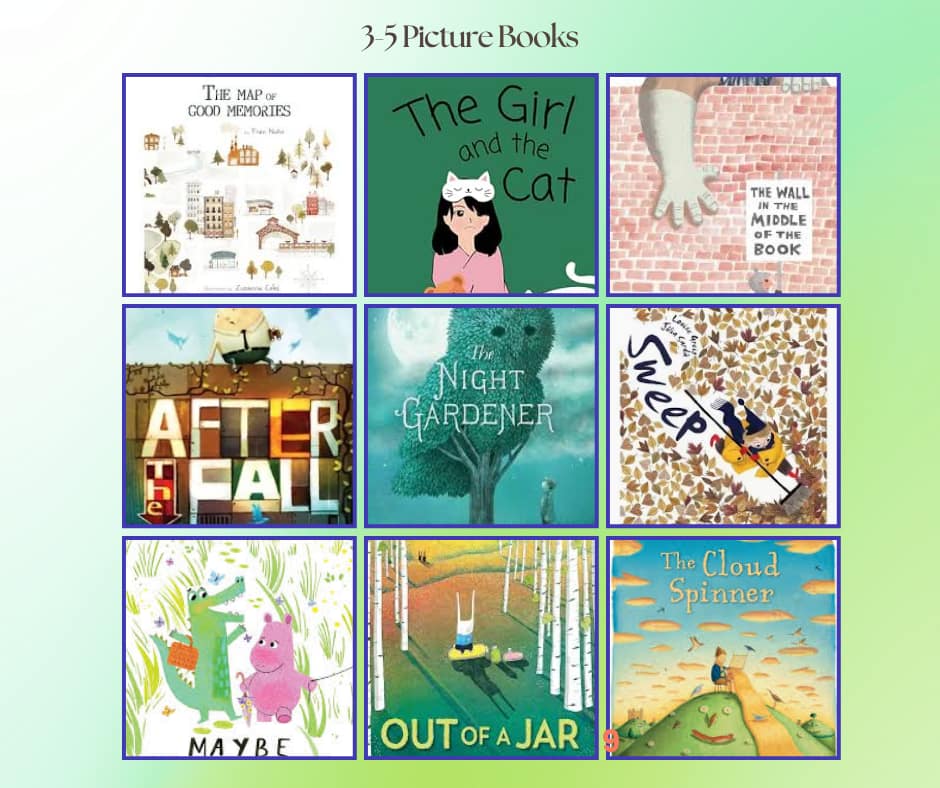
1. The Map of Good Memories by Fran Nuño
A girl uses memory to stay grounded during change.
Try this: Have students draw their own “map of good memories,” labeling locations with people or moments that bring peace.
2. The Girl and the Cat by Camille Garoche
A wordless story about courage and intuition.
Try this: Students storyboard a “silent comic” showing a time they trusted themselves.
3. The Wall in the Middle of the Book by Jon Agee
A great metaphor for fear and perspective.
Try this: Fold paper in half. On one side, draw a fear; on the other, draw what’s really behind it once they look closer.
4. After the Fall by Dan Santat
Explores fear of failure and rebuilding confidence.
Try this: Create “mosaic eggshell” collages with torn paper pieces representing how we rebuild after challenges.
5. The Night Gardener by Terry Fan
A quiet meditation on creativity as self-soothing.
Try this: Students paint silhouette trees and fill them with “leaves of calm” — written coping strategies.
6. Sweep by Louise Greig
Uses a broom as a symbol for emotional clutter.
Try this: Write worries on small scraps, crumple, and “sweep” them into a recycling bin. Reflect: What’s worth keeping?
7. Maybe Tomorrow? by Charlotte Agell
Shows grief and worry through friendship and kindness.
Try this: Create “hope boxes” using folded paper boxes decorated with affirmations inside.
8. Out of a Jar by Deborah Marcero
A creative metaphor for bottling up emotions.
Try this: Draw jars labeled with different emotions. Inside, illustrate what helps each feeling feel lighter.
9. A Stone Sat Still by Brendan Wenzel
Mindfulness through changing perspectives.
Try this: Bring in real stones and decorate them with calm colors or words like “breathe,” “pause,” or “here.”
10. The Cloud Spinner by Michael Catchpool
A lesser-known, powerful story about control, overthinking, and balance.
Try this: Weave strips of colored paper into “thought clouds,” writing one balanced thought per strip.
Counselor’s Corner: Take Story Into Small Group Practice
When stories inspire conversation, that’s where the real growth happens. These tools can help you turn today’s read-alouds into real emotional progress for your students:
Six-Session Small Group: Managing Anxiety Through Art and Reflection
Bring calm, creativity, and connection to your counseling groups with this arts-integrated six-week anxiety curriculum.
Free 10-Day SEL Morning Check-In (Grades K–2)
Start your youngest learners’ days with mindful reflection and emotional awareness — perfect for morning work or calm starts.
Free 10-Day SEL Morning Check-In (Grades 3–6)
Encourage older students to identify, name, and regulate their emotions while building daily SEL habits that stick.
Related Reading
If you enjoyed this post, explore my other story-based SEL roundup:
10 SEL Halloween Read-Alouds Every Teacher and Mom Will Love
Closing Reflection
You don’t have to be an art teacher to integrate art — you just have to believe in the process.
When kids express emotions through color, symbol, or story, they start to make sense of them.
Every brushstroke, every drawing, every story helps a child build confidence that worry doesn’t last forever — it just needs space to be seen.