In my previous article, I shared how I reimagined school counseling while supporting a 704-student caseload. One of the biggest lessons from that experience was this: when time is limited and student needs are high, support has to be simple, consistent, and accessible.
That realization played a major role in the creation of the Moodamals.
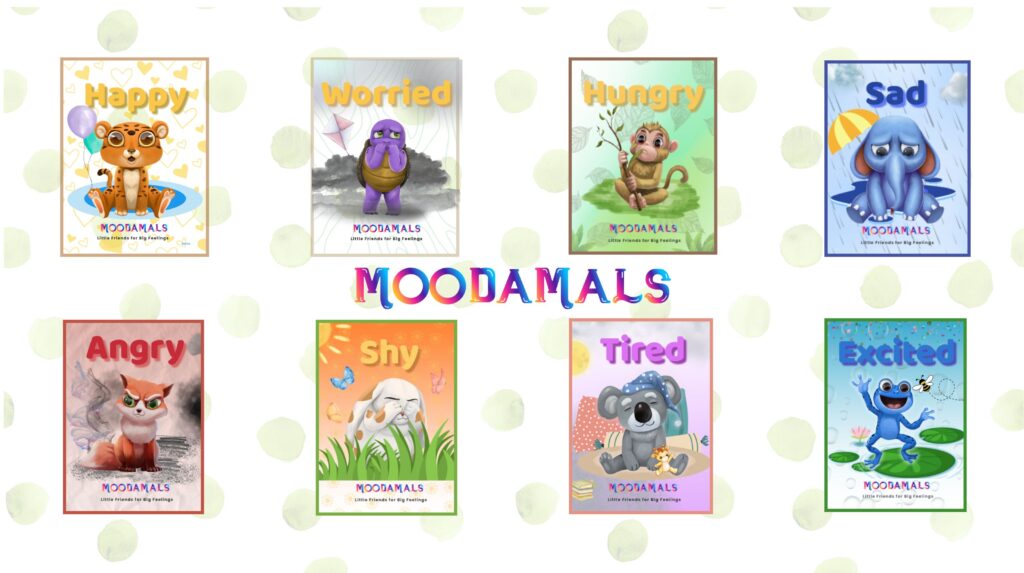
The Moodamals are a group of animal characters designed to help elementary students recognize, name, and talk about their feelings in a way that feels safe and developmentally appropriate. Each Moodamal represents an emotion that shows up regularly in schools—often before students have the language to explain what’s going on.
Why the Moodamals Matter
In a busy school day, students experience a wide range of emotions. Some can easily talk about how they’re feeling, but many cannot. Others may act out, shut down, or struggle academically when emotions go unnamed.
The Moodamals provide a shared emotional language across classrooms, counseling spaces, and calm-down areas. They allow students to identify feelings visually before needing to explain them with words.
Happy
Happy represents moments of joy, pride, and connection. This Moodamal helps students recognize positive emotions and reflect on what brings them happiness. It also supports conversations about celebrating effort, success, and relationships.
Worried
Worried represents feelings of anxiety, nervousness, and uncertainty. This Moodamal is especially helpful for students who struggle with changes, transitions, or performance pressure. Identifying worry visually helps students acknowledge it without feeling singled out.
Hungry
Hungry represents physical needs that directly impact emotions and behavior. Many students struggle to recognize when hunger is affecting their mood, focus, or patience. This Moodamal helps normalize conversations about basic needs and reminds adults to look beyond behavior.
Sad
Sad represents feelings of loss, disappointment, or emotional hurt. This Moodamal offers a gentle way for students to express sadness when words are hard to find. It reinforces the idea that sadness is a normal emotion and that support is available.
Angry
Angry represents frustration, irritation, and strong emotional reactions. This Moodamal helps students recognize anger before it escalates and opens the door to conversations about coping strategies, boundaries, and problem-solving.
Shy
Shy represents hesitation, quietness, and discomfort in social situations. This Moodamal supports students who may feel overwhelmed in group settings or struggle to speak up, helping normalize that not all feelings are loud.
Tired
Tired represents emotional and physical exhaustion. This Moodamal is especially important in school settings where students may be overstimulated, underslept, or overwhelmed. Naming tiredness helps explain behaviors that might otherwise be misunderstood.
Excited
Excited represents high energy, anticipation, and enthusiasm. While often seen as a positive emotion, excitement can still be dysregulating. This Moodamal helps students recognize when excitement needs to be balanced with focus and self-control.
A Tool for Everyday Use
Just as I had to rethink counseling support with a large caseload, the Moodamals were created to support students in real, everyday moments—without requiring extra time, complicated lessons, or constant adult intervention.
They don’t replace counseling conversations. They start them.
By giving students a way to name how they feel, the Moodamals help create consistency, understanding, and connection across the school day.
Over the coming weeks, I’ll be sharing more about each Moodamal—one feeling at a time—as a way to build emotional language gently and intentionally. I’m so glad you’re here to meet the Little Friends for Big Feelings.