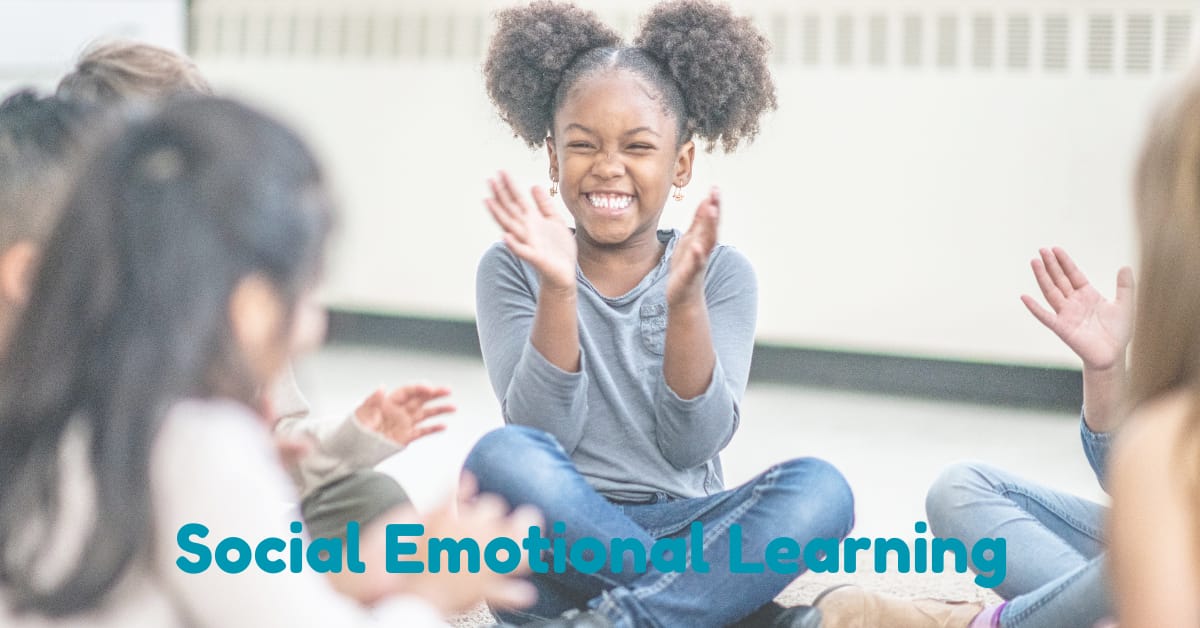
The first weeks of school are full of excitement, nerves, and possibility. That’s why I love starting strong with SEL practices for elementary classrooms that build belonging and set the tone for learning. When kids feel safe, connected, and seen, everything else begins to click.
That’s where social-emotional learning (SEL) makes all the difference. By weaving SEL into your everyday lessons and routines, you set the stage for both academic and personal success. In this post, I’ll share five practical SEL practices for elementary classrooms you can start using right away.
1. Build Belonging From Day One
Before academics can thrive, students need to know: This is a place where I belong.
One of the most powerful ways to build that feeling from day one is through morning meetings or community circles. These don’t have to be complicated—they just need to be consistent.
Try This: Begin each day with a short prompt like, “What is one thing that makes you smile?”
Why It Works: A simple daily check-in sends the message: Your voice matters here. This sense of belonging supports learning and behavior all year long.
2. Weave SEL Into Reading
Stories naturally open the door for SEL. Characters experience problems, feelings, and choices—making ELA the perfect place to practice perspective-taking.
Teachers are often told to “fit in SEL,” but not always given the how. That’s why I wanted to share one of my favorite SEL practices for elementary classrooms during reading: a ready-to-use micro-lesson you can adapt for any grade K–5.
Micro-Lesson Spotlight: Read • Pause • Connect • Create
- Focus: Reading + Empathy
- Grade Levels: K–5 adaptable
- Takeaway: Strengthens comprehension while building empathy
Micro-Lesson: Understanding Characters’ Feelings & Perspectives
Objective: Students will analyze a character’s emotions and choices, then connect those emotions to their own lives.
Steps (30–40 minutes):
- Warm-Up: Ask, “What does it mean to step into someone else’s shoes?”
- Read-Aloud: Choose a book like Alexander and the Terrible, Horrible, No Good, Very Bad Day. Pause and ask:
- “How do you think the character feels right now?”
- “What clues in the text tell us that?”
- Discussion: Connect the character’s struggles to student experiences. Ask: “If you were Alexander’s friend, what could you do to help?”
- Creative Response:
- Write a letter giving the character advice, OR
- Draw a “feelings map” showing how the character’s emotions changed.
- Reflection: Close with: “How can we use what we learned about feelings and perspective in our classroom?”
Why It Works: Kids practice citing text evidence while also learning empathy. This isn’t extra—it’s embedded.
3. Teach Perseverance Through Math
Math sparks strong emotions—sometimes confidence, sometimes frustration. That makes it the perfect subject for teaching resilience.
Try This: After solving a challenging problem, ask:
- “What strategy did you try first?”
- “What did you do when it didn’t work right away?”
Why It Works: Students learn that struggle is normal, and mistakes are part of learning. You’re building problem-solving skills and a growth mindset—two of the most important SEL practices for elementary classrooms.
4. Turn Routines Into SEL Labs
Here’s a secret: your daily routines are a built-in SEL lab.
Every transition, cleanup, and dismissal is a chance to practice self-control, reflection, and mindfulness.
Try This: During cleanup, pause and ask: “Take a deep breath and share one word for how you’re feeling.”
Why It Works: Small mindful practices add up, helping students manage emotions and build focus. Over time, these routines become one of the simplest and most powerful SEL practices for elementary classrooms.
5. Grow Long-Term Resilience
SEL isn’t just about today—it’s about preparing kids for life. A simple way to do this is by setting small, personal challenges that stretch students just a little outside their comfort zone.
Try This: Introduce a “challenge of the week,” such as:
- “I will try a new activity at recess.”
- “I will encourage someone today.”
Why It Works: Kids practice goal-setting, motivation, and reflection—skills that last long beyond elementary school.
Final Thoughts
When SEL practices for elementary classrooms ride alongside the lessons and routines you already use, they stop feeling like one more thing. Instead, they become the way you teach.
Start the year with belonging, weave in empathy through stories, teach perseverance in math, use routines as SEL practice, and stretch students toward long-term resilience. These strategies don’t just fill days—they shape lives.
And that’s the kind of teaching that lasts.