
You may have just packed up your classroom.
Or maybe you are still in that strange end-of-year fog where your body is home, but your brain is still thinking about report cards, missing library books, classroom bins, sticky name tags, and that one random pile you promised yourself you would deal with later.
So before I say anything else, please hear me clearly.
This is not me telling you to spend your summer planning.
I believe teachers deserve summer. Real summer. The kind where your coffee can stay warm, lunch does not have to happen in seven minutes, and no one calls your name from across the room while you are trying to answer an email.
But I also know how teacher brain works.
Even when we are resting, a tiny part of us starts saving ideas for August. Not because we want to rush summer away. Not because we are trying to work every second of break. But because we know how fast the beginning of the year comes once it starts coming.
So this post is not a summer to-do list.
It is a simple save-for-later idea.
If your teacher brain likes to tuck away one helpful idea before back-to-school season gets loud, I would start with morning work.
Why morning work matters more than we sometimes think
Morning work can sound so basic.
Students come in. They unpack. They sit down. They complete something while the teacher takes attendance, checks folders, answers a message, handles lunch count, and tries to figure out who already needs a pencil.
But those first few minutes of the school day carry a lot.
Students do not walk into the classroom as blank slates.
They walk in with backpacks, breakfast crumbs, bus stories, car line feelings, sleepy faces, excitement, worry, sibling arguments, friendship updates, and sometimes a whole morning that happened before they ever got to school.
As a school counselor and former teacher, I have learned to pay attention to those first few minutes.
Some students walk in ready to talk.
Some walk in quiet.
Some look like they need a soft place to land.
Some are already frustrated before the day has even started.
Some are trying so hard to hold it together that you only notice if you slow down enough to really see them.
Morning work should help with that.
It should not just keep students busy while the teacher survives the first ten minutes.
It should create a calmer place to begin.
Morning work can be more than busywork
I do not say this to judge anyone.
I have absolutely been the teacher who copied something because I needed students to have something to do in the morning.
Sometimes you just need a page. Sometimes the printer is your emergency plan. Sometimes you are doing the best you can with the time and energy you have.
But when I think about morning work now, I think about it differently.
I do not just ask, “What can students finish?”
I ask, “What can students show me?”
That shift matters.
Morning work can help students settle into the day.
It can give them a predictable routine.
It can give quieter students a way to share without having to speak in front of the whole class.
It can help you notice who is excited, who is worried, who needs connection, who may be tired, and who is carrying something into the room that morning.
That is the kind of morning work I love.
Not louder.
Not more complicated.
Just more useful.
[IN-POST IMAGE: Simple quote card that says: “Morning work does not have to be busywork. It can be a small window into who students are.”]
Teachers do not need one more complicated system
I care deeply about SEL.
I also understand why teachers sometimes feel overwhelmed by it.
A lot of teachers are asked to support students emotionally all day long, but they are not always given practical, classroom-friendly tools that fit the actual rhythm of the school day.
And that is not a criticism of teachers.
Teachers are already helping students manage feelings constantly.
They are helping students solve friendship problems, calm down, handle disappointment, apologize, try again, make choices, use kind words, deal with frustration, and keep going after mistakes.
That is emotional support.
That is relationship work.
That is real.
But when SEL is presented as one more meeting, one more scripted lesson, or one more program to squeeze into an already packed day, it can start to feel heavy.
Some resources are well-intentioned, but they do not always feel natural in real classrooms.
That is why I like simple routines.
Sometimes SEL does not need to be another big thing.
Sometimes it can live inside a routine teachers already have.
Morning work is one of those routines.
A simple SEL morning work routine can do a lot
A short morning reflection page will not fix every hard morning.
It will not replace counseling support when students need more.
It will not magically make every transition calm.
But it can give students a steady place to begin.
It can help them check in.
It can help them reflect.
It can help them draw, write, choose, create, and share small pieces of who they are.
And over time, those small pieces matter.
You may notice a student who always draws family.
You may notice a student who keeps choosing worried.
You may notice a student who is full of ideas but rarely talks out loud.
You may notice a student who needs encouragement.
You may notice a student who is proud of something you never would have known to ask about.
That is the part I love.
Morning work does not have to become a full meeting to help you get to know your students.
Sometimes a consistent five- or ten-minute routine can tell you a lot.
Why I created 180 Days About Me
I created 180 Days About Me because I wanted teachers to have something practical, meaningful, and easy to use during real school mornings.
Not more paper just for the sake of paper.
Teachers already have enough paper.
I wanted a routine that could help students start the day with intention, reflection, and creativity, without requiring teachers to create a new prompt every night.
The idea is simple:
Students get a daily place to reflect on who they are, how they feel, what they think, what they like, what they choose, and how they express themselves.
Teachers get a routine that is already planned.
And the classroom gets a softer, more predictable start.
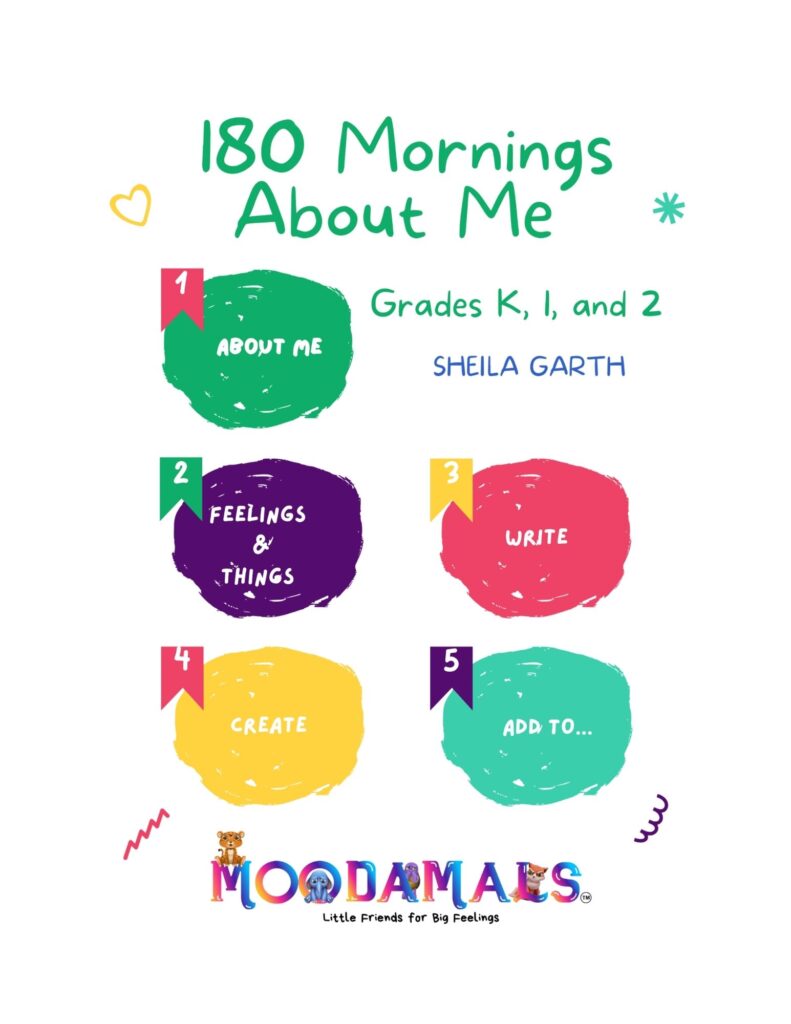
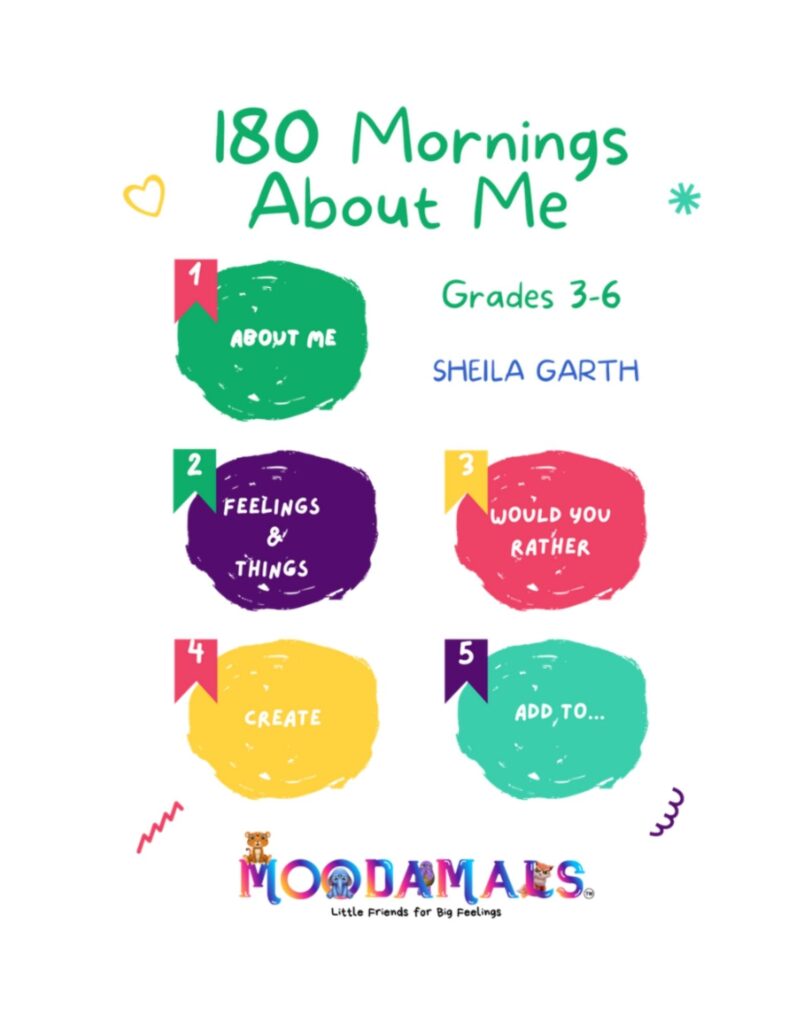
I created two versions of 180 Mornings About Me so teachers can use the same SEL morning work routine at the level that fits their students best.
Two versions for two developmental levels
ITwo versions for two developmental levels
Younger students and older students both need reflection, but they do not need the exact same kind of prompt.
The K–2 version is designed for younger learners who need simple, visual, age-appropriate ways to reflect. It includes activities connected to::
About Me
Feelings and Things
Write
Create
Add To
These pages give younger students different ways to show what they think and feel, even when their writing skills are still growing.
The Grades 3-6 version follows the same heart of the routine, but it is built for older students who need reflection that feels more mature. It includes:
About Me
Feelings and Things
Would You Rather
Create
Life Comics and Add To
That gives older students space for opinions, choices, creativity, storytelling, and deeper reflection without making the work feel too young for them.
Same purpose.
Different level of support.
That matters because a kindergartener and a sixth grader may both need a calm, reflective start to the day, but they do not need the same page.
Save this for August
If you are reading this in June, you do not have to do anything with it today.
Really.
You do not have to print anything right now.
You do not have to organize your whole year.
You do not have to map out every morning from August to May.
You can just save the idea.
When your teacher brain is ready, think about one routine that could make your mornings feel calmer.
Not perfect.
Just calmer.
A good morning work routine can help students settle, give teachers a little breathing room, and create small moments of connection before the academic day fully begins.
That is worth saving.
Helpful SEL Morning Work Resources
If you want this routine ready before back-to-school season gets loud, I created two versions of 180 Days About Me so teachers can use the same SEL morning work structure at the level that fits their students best.
For younger learners, the K-2 version gives students simple, age-appropriate feelings check-ins, reflection prompts, writing opportunities, and creative pages that work well for morning work, arrival time, quiet starts, and classroom connection.
For older students, the Grades 3-6 version uses the same daily SEL routine with prompts designed for deeper reflection, emotional awareness, student voice, creativity, and choice.
You can find them here:
I’ll also be adding more SEL and classroom resources over time, so this post may eventually include related tools like calm corner supports, emotion posters, reflection pages, coping skills activities, or other classroom-ready resources that pair well with SEL morning work.
For now, just save this.
Your future August self does not need you to do everything today.
She may just need one calm routine already waiting for her.