
If your students are suddenly asking for water more often, needing repeated reassurance, getting extra quiet, or shutting down before they even begin, you may be seeing testing stress show up in real time.
And that is part of what makes testing season so tricky.
Not every student who feels anxious is going to say, “I’m nervous.” Some students do, of course. But a lot of the time, testing stress shows up in quieter, less obvious ways. It can look like irritability, avoidance, stomachaches, headaches, distractibility, freezing, rushing, or acting silly to cover insecurity. Teacher-facing resources on test anxiety consistently point out that the signs are often emotional, physical, and behavioral, not just verbal.
You are probably not looking for a perfect testing week. You just want your students to feel calm enough to try, steady enough to focus, and supported enough not to spiral before the test even starts.
That is a very real goal.
What test anxiety can actually look like in your classroom
During testing season, you might notice students who:
- ask to go to the bathroom more than usual
- suddenly need water several times
- complain that their stomach hurts or they do not feel well
- rush through work just to get it over with
- freeze and stare at the page
- get frustrated faster than normal
- ask for constant reassurance
- become extra silly, emotional, or off-task
Sometimes the behavior is not really about the behavior.
Sometimes it is a student’s way of showing you, “This feels like a lot.”
That is why it helps to look at the whole picture before jumping straight to correction. Testing stress can affect confidence, focus, working memory, and emotional regulation, even when students know more than they are able to show in that moment.
What you really want during testing season
At this point in the year, you probably do not need one more complicated idea.
You probably want:
- a calmer room
- students who can get started without panic
- a few simple supports that actually help
- language that encourages without increasing pressure
- and practical tools you can use right away
That is the heart of it.
Not perfection.
Not pretending testing is fun.
Just helping students feel a little more steady in a high-pressure moment.
5 simple ways to support students when anxiety shows up sideways
1. Notice the pattern before you label the behavior
If a student suddenly needs extra reassurance, avoids getting started, or keeps asking to leave the room, pause for a second before assuming it is just off-task behavior.
Sometimes what looks like stalling is really stress.
A child who keeps asking for water may not really need water. They may need a break from the pressure they are feeling. A child who gets silly may not be trying to be difficult. They may be trying to avoid a moment that feels too big.
2. Normalize nerves without making the test feel scarier
You do not have to act like the test is no big deal.
But you also do not want to accidentally make it feel heavier than it already does.
You can say things like:
- “It’s okay to feel a little nervous before something important.”
- “Your body might feel extra alert today, and that does not mean you are not ready.”
- “You do not have to feel perfect to do your best.”
That kind of language helps students feel seen without making anxiety the center of the room.
3. Give students something concrete to do
A lot of students do better with a simple action than with a vague reminder to “relax.”
You might try:
- box breathing
- pressing feet into the floor
- loosening shoulders and hands
- one calm self-talk phrase
- a quick grounding strategy before beginning
Simple routines and concrete calming tools are often recommended because they help students move from overwhelm into action.
4. Keep your tone as steady as possible
Your students notice more than you think.
If everything feels rushed, intense, or high-pressure, they absorb that quickly. A calm voice, predictable transitions, and simple directions can lower the emotional temperature of the room in a big way.
You do not have to overperform calm. You just have to offer steadiness.
5. Focus on steadiness, not hype
Some students do not need a big motivational speech.
They just need simple reminders like:
- “Take your time.”
- “Use what you know.”
- “One question at a time.”
- “You can do hard things without doing them perfectly.”
That kind of support often lands better than pressure-filled encouragement.
Ready-to-use testing support
If you need simple classroom tools to support students during testing season, these are the resources I’d point you to first:
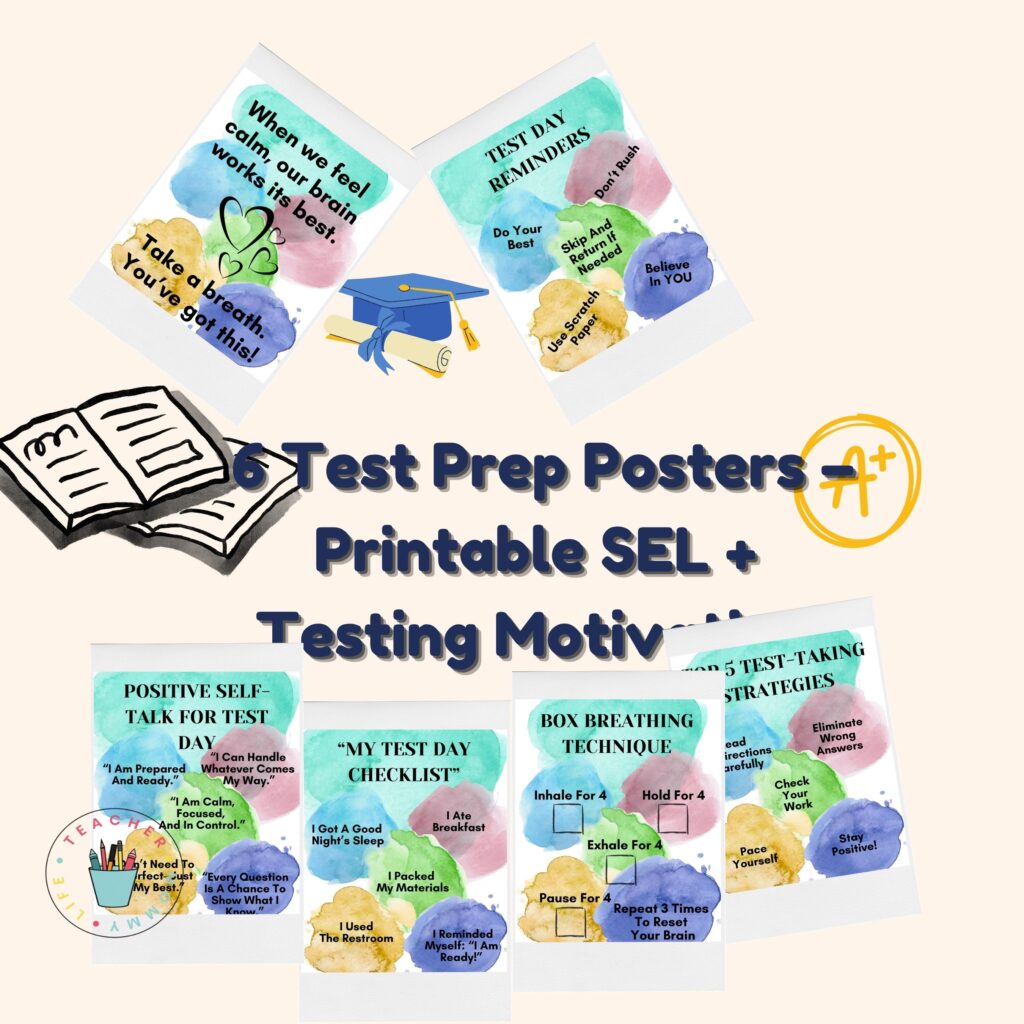
Printable Test Prep Posters – Calm & Confident Testing
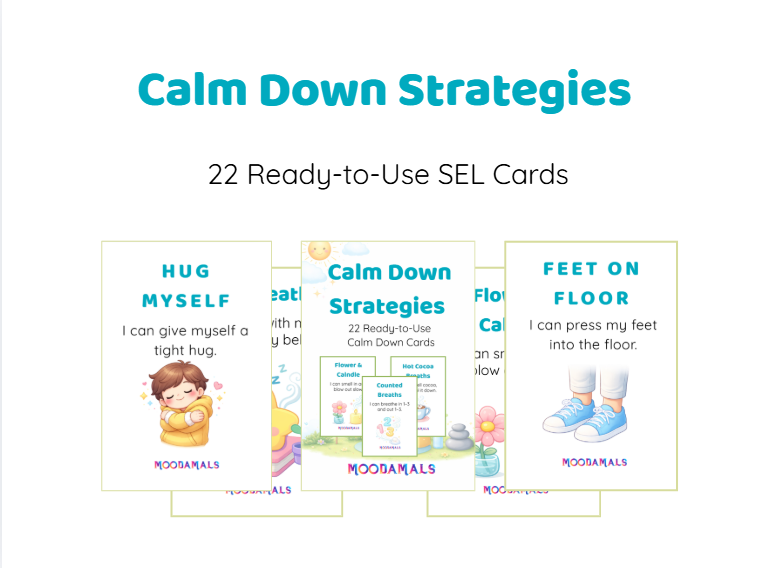

Test-Taking Strategies for Success Editable PPT
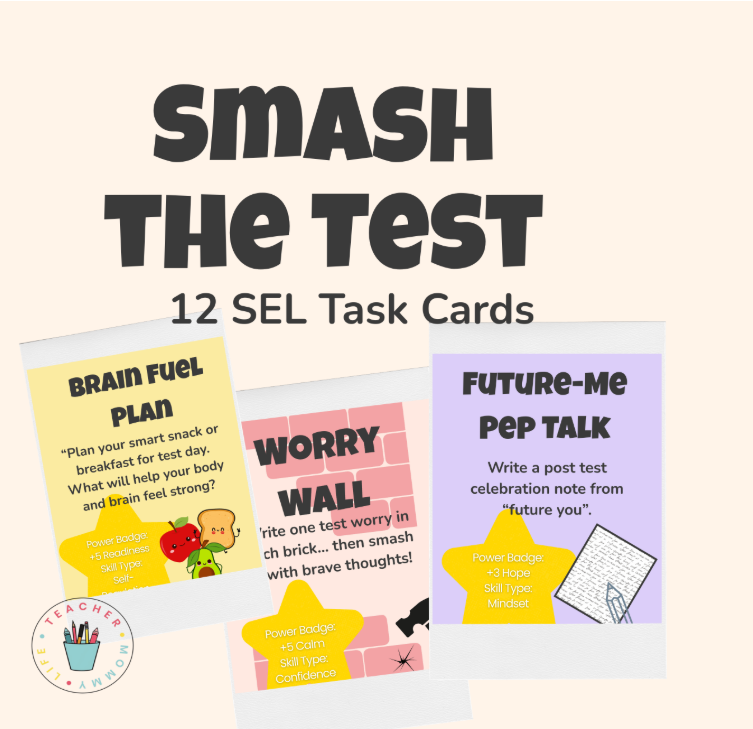
Smash the Test: Foldable SEL Coping Cards for Test Anxiety
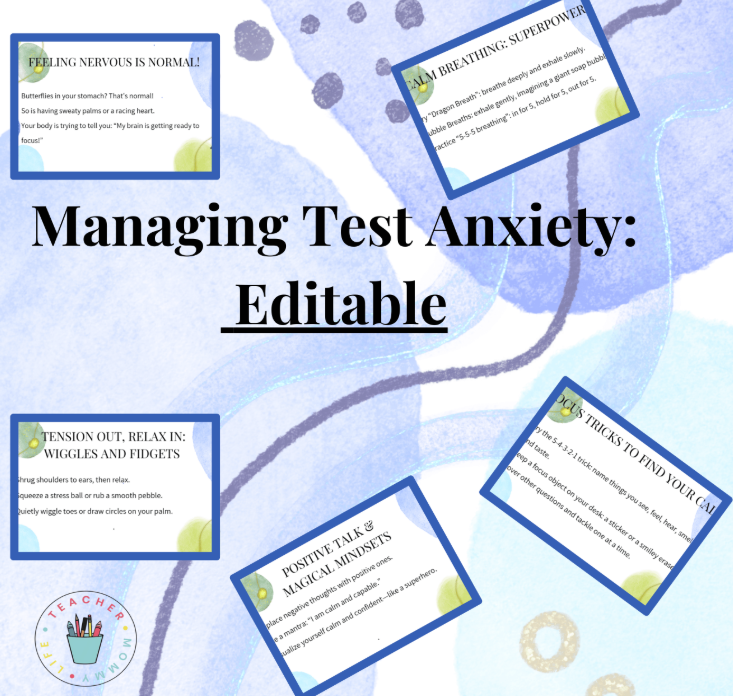
Managing Test Anxiety: Feel Calm, Do Great! (Editable Toolkit)
If you want to browse more classroom resources, you can also visit my full Teachers Pay Teachers shop here:

Final thought
Testing anxiety does not always look dramatic.
Sometimes it looks like a child asking for water again. Sometimes it looks like silence, frustration, or a student who suddenly seems unlike themselves. Sometimes it looks like a child who knows more than they can show because the pressure got there first.
If that is what you are seeing right now, you are not imagining it.
And your support matters.
You do not have to remove every hard thing from testing season. But you can help your students feel calmer, more grounded, and more capable as they move through it.