
Visual Storytelling is amazing! There’s something magical about watching students tell a story through art.
Before a single word appears, their colors, shapes, and patterns start to speak — often louder than language ever could.
That’s the beauty of arts integration: it helps students express understanding, emotion, and imagination all at once. When we give kids opportunities to show what they feel about a story — not just what happened — we invite them into deeper, more personal learning.
Why Visual Storytelling Works
When students use visual symbolism, they’re translating big ideas into images that hold meaning.
A single color or object can represent emotion, conflict, or transformation — and in doing so, students start connecting art, literacy, and social-emotional learning naturally.
A few examples I love to use:
- A storm might symbolize change or conflict.
- A bridge could represent connection or empathy.
- A key may stand for trust, courage, or opportunity.
Visual storytelling builds emotional vocabulary, strengthens comprehension, and helps even the quietest students find a way to be heard.
How to Try It in Your Classroom or Counseling Space
How to Try It in Your Classroom or Counseling Space
- Start with a story or SEL theme.
Choose a story rich in emotion or imagery — something with layers of meaning. - Ask: “What does this story look like?”
Encourage students to brainstorm colors, shapes, and symbols that match the story’s feeling or message. - Create visual stories.
Let students design drawings, collages, or mixed-media pieces that tell the story without words. - Reflect and share.
Ask questions like: “What emotion does your artwork show?”
“What symbol did you use to represent the main idea?”
“How does your art tell this story differently than words would?”
These small conversations help students make connections between art, empathy, and understanding.
My Own Reminder About Visual Storytelling
A few months ago, I started playing around with mug designs inspired by my favorite childhood stories. It wasn’t for a shop — just something creative to do after work.
Each design became a little visual experiment, and before I knew it, I was doing the same thing I teach my students: using color and symbolism to tell a story.
And somewhere in the middle of uploading them to Etsy, I noticed something funny — they all started to look the same.
I laughed, because isn’t that how creativity works? We repeat patterns until we’re ready to tell a new story.
That project reminded me why I love arts integration so much. It’s not about the outcome — it’s about the process. It’s about giving yourself (and your students) space to explore, play, and find meaning through art.
Storytelling Through Design
Coraline – Courage & Curiosity
Deep blues and button motifs that symbolize mystery, independence, and quiet bravery.

The Wizard of Oz – Hope & Belonging
Greens and golds that echo courage, home, and the journey of finding your way back.

Alice in Wonderland – Curiosity & Creativity
Playful shapes and whimsical lines that reflect wonder, imagination, and questioning

Charlie & the Chocolate Factory – Joy & Wonder
Bright, candy-inspired tones that celebrate creativity and delight in the unexpected.

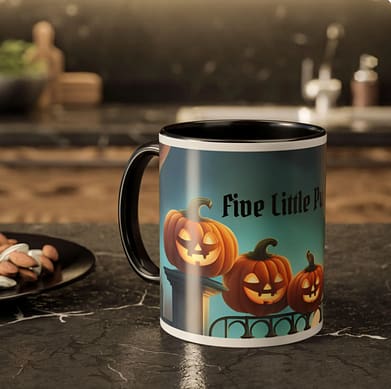
Five Little Pumpkins – Nostalgia & Comfort
Warm autumn oranges and rustic textures that feel like laughter and fall mornings
Why It Matters
Whether it’s a counseling group exploring feelings or a classroom interpreting literature, visual storytelling teaches students that art is more than decoration — it’s communication.
It gives every child (and every adult) a way to tell their story — clearly, creatively, and authentically.
If you’d like to read more about how creativity supports emotional learning, here’s one of my Edutopia reflections: [insert link].
Final Thoughts
When we create, we’re really processing what we love, fear, and hope for.
And that’s what I want my students (and myself) to remember — every piece of art tells a story worth listening to.
So, whether it’s a drawing, a poem, or a painted mug, let’s keep making room for art that speaks — even when the words don’t.
Curious About Arts Integration?
Check out my articles on Edutopia
Check out my blog post on another amazing arts integration strategy…See, Think, Wonder