If you work with students, you already know that sadness shows up in many forms—quietness, frustration, tears, withdrawal, or even silly behavior that masks something heavier underneath. Because of this, sadness can be one of the most difficult emotions for children to name, let alone process.
However, story changes everything.
Books offer students language for their feelings, help them build empathy, and provide safe emotional distance. When paired with simple arts-integrated activities, these stories become even more powerful, since they help children understand what they’re feeling and express it in healthy ways.
Below are 10 beautiful books that help students understand sadness, each designed to support emotional growth through story, art, and content connections.
1. The Velveteen Rabbit by Margery Williams
How It Helps
This classic story explores themes of love, loss, and growing up. As a result, students learn that sadness often appears during times of change.
Arts Integration
Create a “Real vs. Pretend Heart” collage. Students design two hearts using texture—one that feels “new” and one that feels “real.”
Content Connection
ELA Character Analysis (RL.3.3 / RL.4.3)
Describe how the Rabbit changes from beginning to end and what events caused those changes.
2. The Invisible String by Patrice Karst
How It Helps
This story gives students a memorable visual for connection during separation, grief, and transition. Because of this, children feel reassured that they are never truly alone.
Arts Integration
Students draw two people connected by an “invisible string,” coloring the emotions represented on the string.
Content Connection
SEL Relationship Skills
Identify trusted adults and practice help-seeking strategies.
3. A Shelter in Our Car by Monica Gunning
How It Helps
This book explores sadness and uncertainty through family hardship. Furthermore, it encourages empathy and helps students recognize community resilience.
Arts Integration
Create a “Safe Place” diorama using simple classroom materials.
Content Connection
Social Studies
Discuss ways communities support families during difficult times.
4. The Heart and the Bottle by Oliver Jeffers
How It Helps
This story shows how children may protect themselves after sadness and how healing eventually begins. In addition, it encourages conversations about emotional safety.
Arts Integration
Students design a symbolic “heart in a bottle” and write what a person might tuck away to feel protected.
Content Connection
ELA Theme (RL.4.2)
Identify the message about healing and opening up again.
5. After the Fall by Dan Santat
How It Helps
This powerful story teaches students about rebuilding after embarrassment or failure. Ultimately, it helps them understand that resilience often grows from struggle.
Arts Integration
Students create a storyboard showing a time they “fell” and what helped them rise again.
Content Connection
Writing – Personal Narrative
Write about a moment when they showed resilience.
6. Each Kindness by Jacqueline Woodson
How It Helps
This story explores sadness, regret, and the desire to make things right. Consequently, students discover how their choices affect others.
Arts Integration
Students create a watercolor “ripple effect” painting that shows how kindness spreads.
Content Connection
SEL Social Awareness
Reflect on how choices impact others.
7. The Red Tree by Shaun Tan
How It Helps
This symbolic book validates feelings of heaviness, confusion, and sadness. Because of its visual complexity, students find new ways to express difficult emotions.
Arts Integration
Create a mixed-media collage representing different emotional states.
Content Connection
Visual Arts
Discuss how color and imagery communicate emotion.
8. The Rabbit Listened by Cori Doerrfeld
How It Helps
This gentle story demonstrates that sadness often needs listening, not fixing. As a result, students learn to support peers with empathy and patience.
Arts Integration
Students create “listening ear” headbands and practice reflective listening in pairs.
Content Connection
SEL Self-Management
Identify calming strategies for difficult moments.
9. The Rough Patch by Brian Lies
How It Helps
This quiet, beautiful story addresses grief, coping, and new beginnings. Through this narrative, students learn that hope can return even after loss.
Arts Integration
Students design a “growth garden” showing new beginnings after a hard experience.
Content Connection
Using Evidence (RL.5.1)
Cite textual evidence showing how the main character changes over time.
10. Tears Are Not Forever by Elizabeth Verdick
How It Helps
This straightforward book explains why we cry and how tears help us cope. Additionally, it normalizes emotional release for children who struggle to express sadness.
Arts Integration
Students paint different shapes or “styles” of tears and label the emotions each one represents.
Content Connection
Health Education
Explore how the body responds to strong feelings.
Velveteen Rabbit Mug + Tumbler Set
To extend the emotional themes of The Velveteen Rabbit, I designed a cozy Velveteen Rabbit Mug and matching Tumbler. Together, these pieces create a comforting set perfect for:
- classroom mornings
- counselor offices
- reading corners
- thoughtful teacher gifts
Both items feature matching artwork, ensuring they pair beautifully.
Shop the collection


Moodamals “Sad” Poster
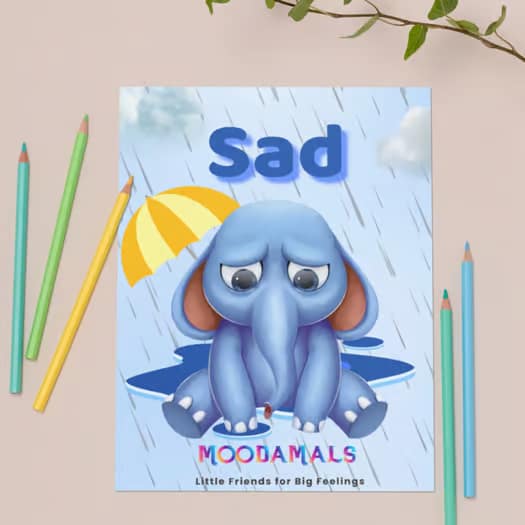
This calming, child-friendly poster helps students name their feelings and understand sadness in a safe, approachable way. Therefore, it’s ideal for:
Inside the free library, you’ll instantly receive:
- counseling offices
- calm corners
- SEL lessons
- morning meeting stations
Available as:
Free SEL Resource Library for Teachers
- A–Z Worry-Free One-Pager
- 20+ SEL Coloring Pages
- 10-Day Mornings About Me Preview (K–2)
- 10-Day Mornings About Me Preview (Grades 3–5)
Click here to access the library instantly.
If You Enjoyed This Post…
You may also love reading The Power of Imagination in the Classroom, which shows how creativity builds calm, confidence, and connection in students.