
We all know that first ten minutes of the day.
Backpacks unzip. Voices rise. Someone forgot homework. Someone else is already upset. You’re taking attendance, answering questions, redirecting behavior—and trying to mentally prepare for math block at the same time.
And even when students are “quietly working,” your classroom morning routine can still feel chaotic.
If your mornings feel reactive instead of predictable, you are not alone.
But here’s something important:
It’s probably not because you aren’t trying hard enough.
It’s because many classroom morning routines are designed to keep students busy—not to help them start the day grounded.
The Real Problem With Most Classroom Morning Routines
Teachers often search for:
- morning routine classroom ideas
- 3rd grade morning work
- behavior management morning routine
- classroom morning routine ideas
But what we’re really looking for is stability.
We want:
- A predictable classroom morning routine
- Fewer behavior interruptions
- Students who are emotionally ready to learn
But many routines rely on random worksheets, rotating themes, or last-minute planning.
And when the routine changes constantly, students don’t know what to expect.
And when students don’t know what to expect, behavior fills the gap.
Quiet Isn’t the Same as Regulated
As a former classroom teacher and now a school counselor, I’ve seen this pattern again and again:
Students can be quiet…
…and still emotionally dysregulated.
They can be completing a worksheet…
…and still feel anxious, frustrated, or disconnected.
A strong classroom morning routine does more than fill time. It builds:
- Predictability
- Emotional awareness
- Reflection skills
- Regulation habits
Without those pieces, we end up managing behavior instead of preventing it.
If this idea resonates with you, you might also like this post on making morning work more intentional and SEL-focused:
👉 5 Simple Ways to Provide Mental Health Support in Your Classroom
What Actually Fixes a Chaotic Classroom Morning Routine
The shift isn’t about adding more.
It’s about adding structure.
A predictable classroom morning routine that includes social-emotional learning gives students a consistent entry point into their day.
When students know:
- What they will do
- How to connect to their feelings
- How to reflect
- What to expect next
Their nervous systems settle.
And when students feel regulated, your classroom feels calmer.
Why Structure Matters More Than Variety
It can feel tempting to rotate fun activities or switch things up weekly.
But especially in upper elementary, repetition builds mastery.
Students need time to practice:
- Naming emotions
- Reflecting on behavior
- Setting intentions
- Noticing patterns
When those skills are built into a consistent daily system, your classroom morning routine stops feeling improvised…
…and starts feeling intentional.
If You’re Ready for a System (Not Just Another Idea)
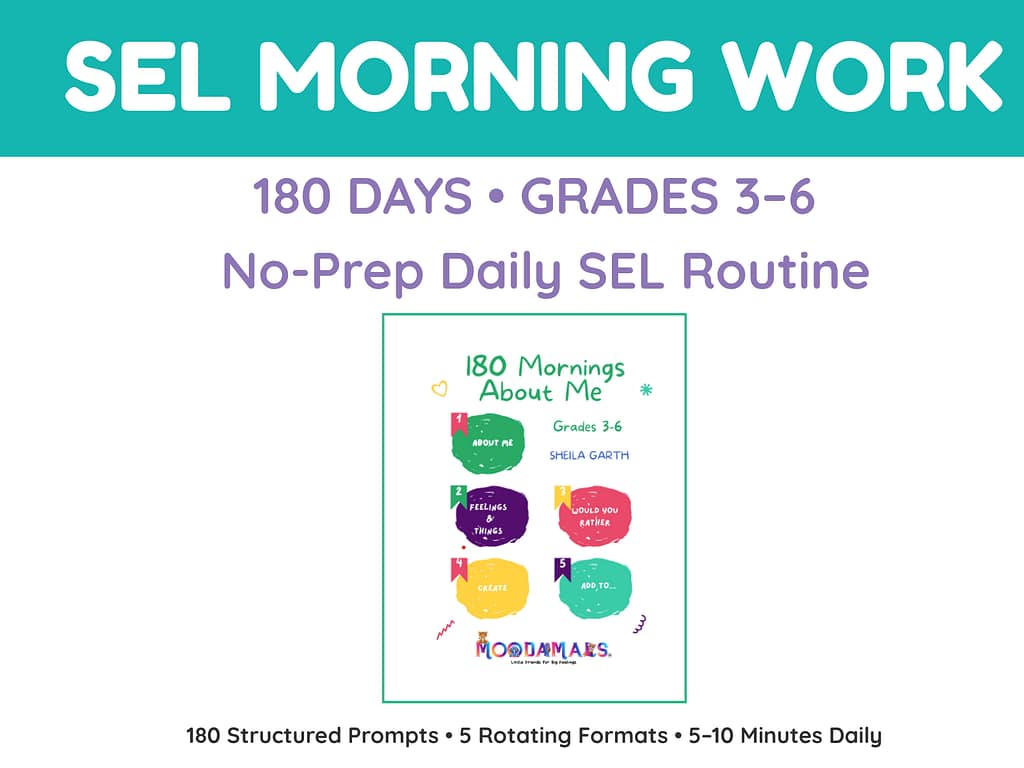
That’s exactly why I created a structured 180-day SEL morning work routine for grades 3–6.
Not to add more to your plate—but to take something off of it.
This resource gives you:
- A predictable daily structure
- Built-in emotional check-ins
- Reflection and regulation practice
- No prep required
- Consistency your students can rely on
So instead of asking:
“What should I do for morning work this week?”
👉 You already have a plan.
👉Your plan for the WHOLE year!
Imagine This Instead
Students enter your classroom.
They sit down.
They begin a familiar reflection routine.
They know exactly what to expect.
You take attendance.
You circulate calmly.
You guide instead of react.
The first ten minutes feel steady instead of scattered.
That’s the power of consistency paired with SEL structure.
Final Thought
If your mornings still feel chaotic after trying new ideas…
…it may not be because you need more activities.
👉 It may be because you need a system.
And systems create calm.
If you want a ready-to-use structure that builds emotional awareness and consistency every single day:
👉Your year long morning system for calm