Anger shows up in every classroom in different ways. Sometimes it bursts out in loud, surprising moments; other times it hides behind silence, withdrawal, or a student who suddenly shuts down. Because anger can feel overwhelming and confusing for kids, stories offer a powerful doorway into understanding what’s happening inside. In addition, they give students language for big emotions and introduce healthier ways to respond. As a result, children begin to recognize what anger looks like, why it appears, and how to manage it more confidently.
These ten REAL children’s books about anger are classroom favorites. They’re engaging, visually strong, and perfect for Grades 2–6. Each story builds understanding without shame and opens up gentle, meaningful conversations about emotional regulation.
⭐ 10 REAL Stories That Help Kids Understand Anger
1. When Sophie Gets Angry—Really, Really Angry
Author: Molly Bang
A classic story showing Sophie’s explosive anger and how she uses nature, movement, and space to calm herself.
Why kids connect:
Sophie’s reactions feel real and familiar, and her cool-down strategy is beautifully modeled.
Arts-integration idea:
Create “anger to calm” color gradients using warm → cool colors.
2. Anh’s Anger
Author: Gail Silver
Anh meets his anger as a character he can sit with, breathe with, and learn from.
Why kids connect:
It teaches that anger isn’t bad—it’s a signal inviting us to pause.
Activity:
Students draw their own “anger creature” and write what it might be trying to tell them.
3. The Volcano in My Tummy: Helping Children Handle Anger
Authors: Eliane Whitehouse & Warwick Pudney
A practical, metaphor-rich guide that turns anger into a volcano with early warning rumblings.
Why kids connect:
The volcano imagery makes physical sensations of anger easier to understand.
Extension:
Have students create volcano “warning sign” posters.
4. Ravi’s Roar
Author: Tom Percival
Ravi gets so angry he turns into a roaring tiger—but learns how to come back to himself.
Why kids connect:
A perfect metaphor for anger taking over and the relief in calming down.
Arts-integration:
Students create tiger masks that show “anger stripes” and “calm stripes.”
5. The Angry Dragon
Author: Michael Gordon
A relatable story where a child’s anger turns into a fire-breathing dragon who needs help cooling down.
Why kids connect:
Dragons make anger feel powerful but not scary.
Activity:
Make “cool-down dragon breath” cards—4-second inhale, 6-second exhale.
6. Alexander and the Terrible, Horrible, No Good, Very Bad Day
Author: Judith Viorst
A classic exploration of frustration, irritation, and “everything goes wrong” days.
Why kids connect:
They’ve all had a day like Alexander’s.
Extension:
Students write their own “Terrible, Horrible…” pages and end with one good thing.
7. The Red Beast: Helping Children to Understand and Manage Anger
Author: K. I. Al-Ghani
Anger appears as “the Red Beast,” a creature that grows when ignored but shrinks with regulation skills.
Why kids connect:
Externalizing anger makes it feel manageable.
Activity:
Students design a “Red Beast Toolkit” of strategies.
8. How to Take the Grrr Out of Anger
Authors: Elizabeth Verdick & Marjorie Lisovskis
A kid-friendly guide with concrete anger management tools and relatable examples.
Why kids connect:
It combines humor with practical strategies older kids can use.
Extension:
Create a class “Grrr-Buster Strategy Wall.”
9. Soda Pop Head
Author: Julia Cook
Shows anger as pressure building inside a soda bottle until it explodes—and how to release it safely.
Why kids connect:
The soda pop metaphor is vivid, funny, and easy to remember.
Activity:
Students illustrate their own “pressure meter.”
10. Zach Gets Frustrated
Author: William Mulcahy
Part of the Zach Rules series, this story models step-by-step frustration and anger regulation skills.
Why kids connect:
Zach feels real, and the coping steps are simple enough to use immediately.
Extension:
Students role-play Zach’s three-step problem-solving process.
⭐ Arts-Integrated Activities to Explore Anger (Grades 2–6)
1. Color-and-Shape Anger Maps
Students create visual representations—spikes, spirals, bursts—showing what anger feels like inside.
Transition focus:
This activity increases body awareness while helping students notice early cues.
2. Movement Mirrors
Partners mirror each other’s “slow to calm” movements.
Transition focus:
As they move together, students learn co-regulation skills they can use anywhere.
3. Soundscapes for Big Feelings
Students create anger → calm soundscapes with instruments or found objects.
Transition focus:
The shifting sounds demonstrate how emotions rise and fall.
⭐ Want a Ready-to-Go Anger Resource?
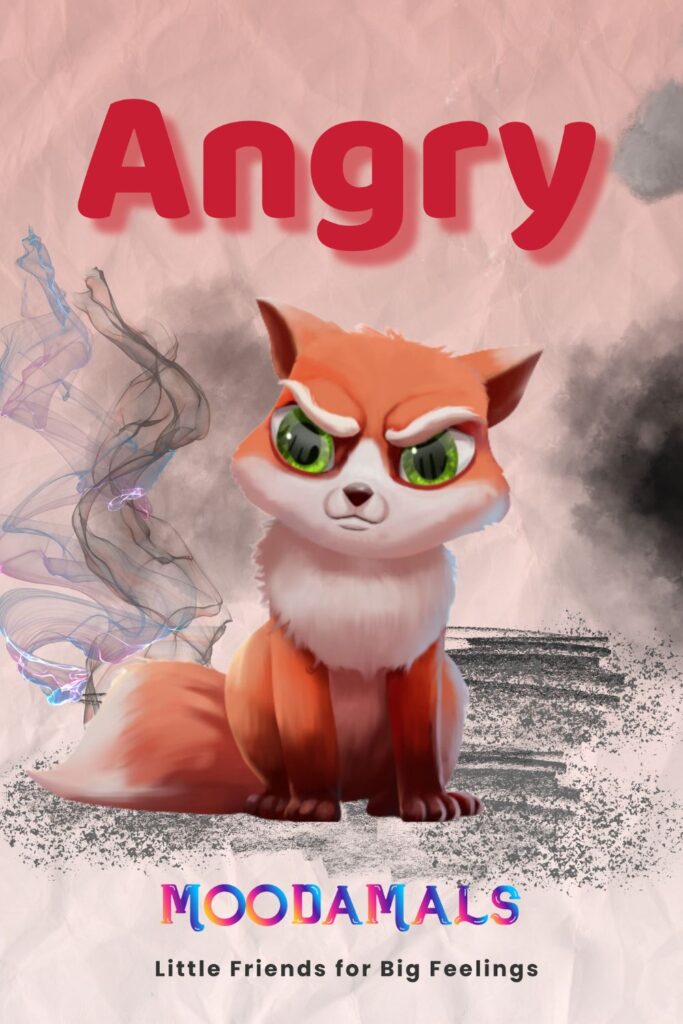
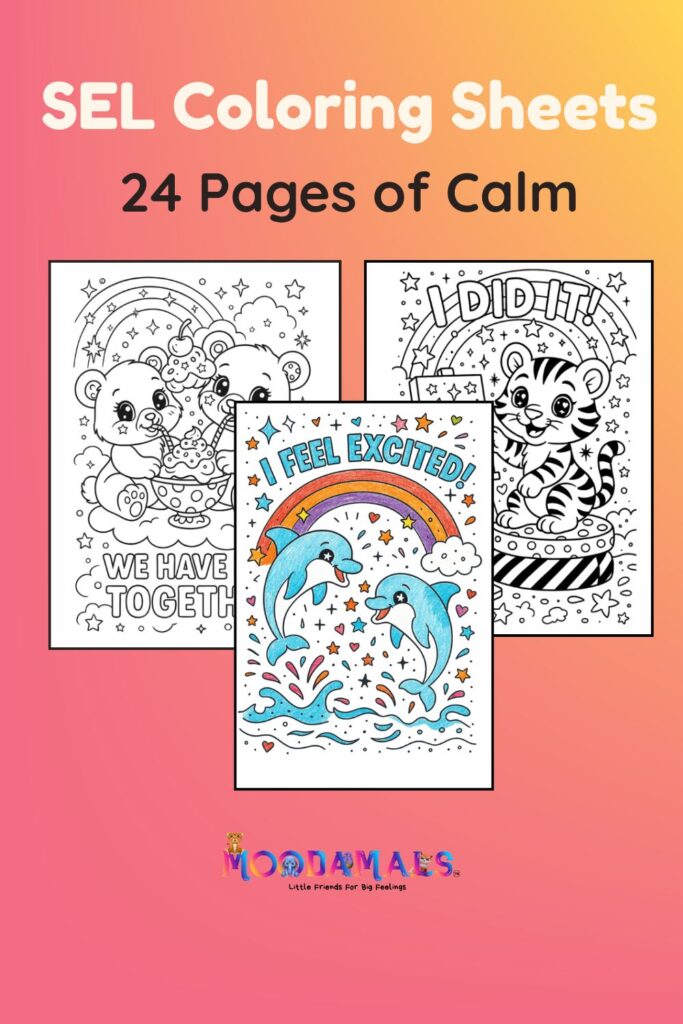
If you need visual tools for calming corners, guidance lessons, or class discussions, my Moodamals Angry Poster and SEL Coloring Pack make teaching emotional regulation easier and more engaging.
Moodamals Angry Poster TPT Digital Download
Moodamals Angry Posters ETSY Physical Poster
SEL Coloring Sheets 24 Page TPT Digital Download
Perfect for:
- Morning work
- Calm-down corners
- Early finishers
- SEL small groups
- Art-integrated lessons
⭐ More Resources for Big Feelings
Read next: 10 Creative Stories That Help with Worries (Grades 2–6)
Free SEL Resource Library for Teachers
- A–Z Worry-Free One-Pager
- 20+ SEL Coloring Pages
- 10-Day Mornings About Me Preview (K–2)
- 10-Day Mornings About Me Preview (Grades 3–5)