
Let’s be honest — teacher anxiety in the morning is rarely about one big thing.
Usually, it isn’t just the lesson plan.
It’s not the parent email.
And it’s rarely the meeting later in the day.
Instead, it’s the stack of small moments that all happen at once.
Students are walking in with big energy.
Someone calls your name before you even sit down.
Another student forgot their folder.
Meanwhile, someone else needs help right now.
And sometimes a child walks in carrying something from home you can see written all over their face.
At the same time, you’re taking attendance, checking notes, answering questions, redirecting behavior, and trying to settle the room before instruction even begins.
That is a lot for the first few minutes of the day.
So if mornings feel tense before the day has really started, you are not alone.
More importantly, you are not doing anything wrong.
In many cases, teacher anxiety in the morning is actually a structure issue — not a competence issue.
When the first 10–15 minutes of the day involve too many decisions, too much unpredictability, and too many moving parts, your brain naturally shifts into stress mode.
However, that doesn’t mean you are unprepared.
Instead, it often means the start of the day is asking too much from you too early.
Fortunately, small adjustments to your morning routine can make a big difference.
Here are five simple ways to manage teacher anxiety in the morning without adding more to your plate.
1. Reduce Morning Decision Fatigue
One of the biggest reasons teacher anxiety builds so quickly in the morning is decision overload.
Before the first lesson even starts, you may already be deciding:
- what students should do first
- how to respond to side conversations
- whether someone needs support or redirection
- if the lesson needs adjusting because the room feels off
- how to handle the student who walked in upset, distracted, or dysregulated
That is a huge amount of mental work before 8:30.
The more your morning depends on in-the-moment decisions, the more draining it becomes.
When possible, make those decisions ahead of time.
Use the same entry routine.
Keep materials in the same place.
Have the same first-step expectation every day.
The goal is not rigidity.
The goal is relief.
2. Keep the First 10 Minutes Identical Each Day
Teacher anxiety often spikes when the start of the day feels different every morning.
If students are not sure what to do when they walk in, you end up repeating directions, correcting behavior, answering the same questions, and trying to create calm while already feeling rushed.
A predictable start changes that.
When the first 10 minutes follow the same pattern every day:
Students settle faster.
Questions decrease.
Expectations stay clear.
The emotional tone of the room feels steadier.
And honestly, so do you.
Predictability is not boring in a classroom.
Predictability is supportive.
3. Use Morning Work That Helps Students Settle — Not Just Stay Busy
A lot of morning work keeps students occupied.
But occupied and regulated are not the same thing.
Busy work may buy you a few quiet minutes, but it does not always help students arrive emotionally. And when students have not really settled, teachers end up spending the next 20 minutes managing the ripple effects.
That is where teacher anxiety in the morning can really build.
Because now you are not just starting the day.
You are recovering the day.
Meaningful morning work can help shift that.
When students begin with reflection, emotional check-ins, or simple structured prompts, the room often feels calmer, transitions go more smoothly, and you spend less energy correcting and re-centering.
Sometimes managing teacher anxiety starts with helping students regulate first.
Want to see what this looks like in a real classroom routine?
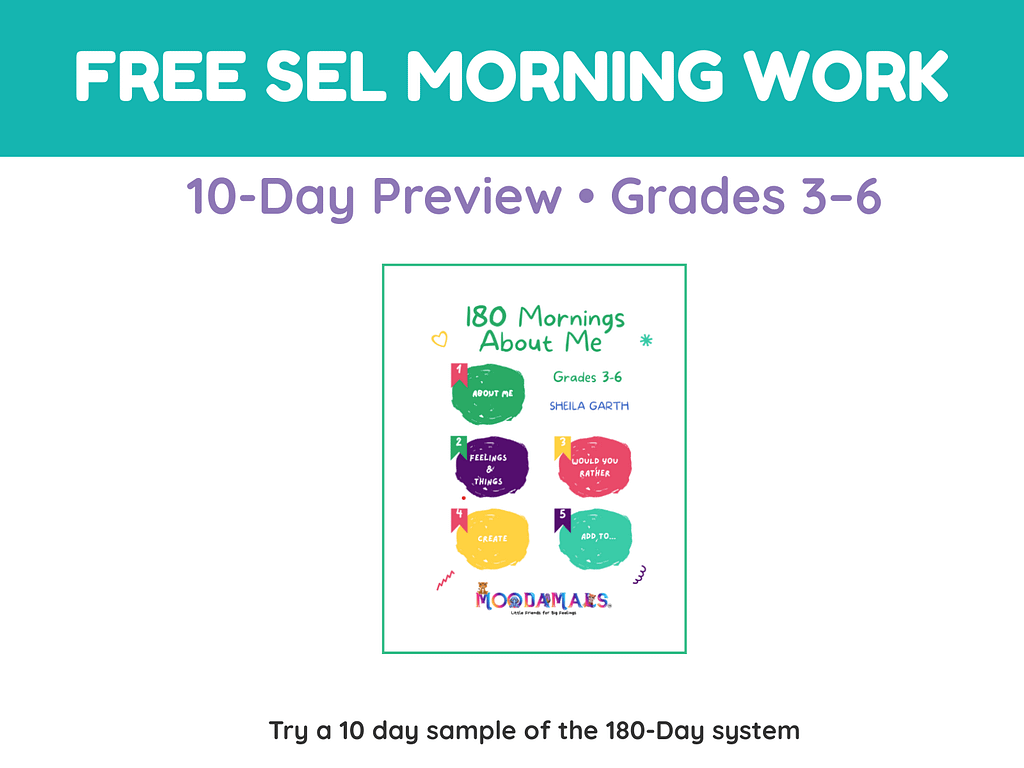
Grab the free preview of my 180 Days of SEL Morning Work for Grades 3–6
4. Stop Reinventing Your Morning Routine Every Week
Let’s be real — searching for new morning work ideas every Sunday can feel productive.
But it also adds to your mental load.
When the format changes all the time, students need new directions.
New directions lead to more questions.
More questions lead to more decisions.
And more decisions create more pressure first thing in the morning.
If mornings already feel heavy, they probably do not need more novelty.
They need more consistency.
A stable framework does not make your classroom less meaningful.
It makes it more manageable.
5. Commit to One Framework That Carries the Year
One of the most powerful ways to reduce teacher anxiety in the morning is to stop piecing the start of the day together week by week.
A consistent framework helps because:
- you know what is coming
- students know what is coming
- emotional skills build over time
- planning pressure goes down
That is why I moved away from scattered morning activities and started leaning into a more structured long-term approach.
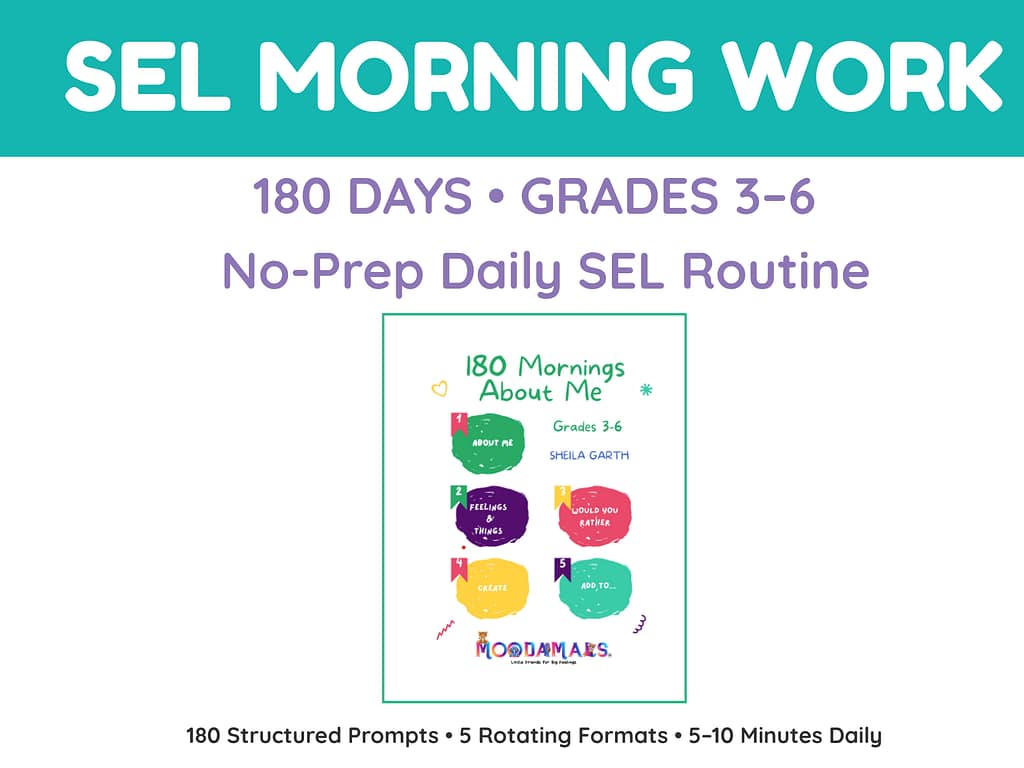
My 180 Days of SEL Morning Work for Grades 3–6 was created to support real classrooms that need calm, consistency, and meaningful reflection without extra prep.
It is not scripted.
It is structured.
It gives you a predictable system for the whole year, so you are not scrambling for what students should do the minute they walk in.
Explore the full 180 Days of SEL Morning Work for Grades 3–6
Final Thought
Teacher anxiety in the morning does not automatically mean you need to work harder.
And it does not mean you are falling short.
Sometimes it simply means you are carrying too many decisions, too much energy, and too much unpredictability before the day has even begun.
And sometimes the most supportive change is not adding something new.
It is committing to something consistent.
Want More Helpful Stategies?
5 Simple Ways to Provide Mental Health Support in Your Classroom